
Last updated November 21, 2026
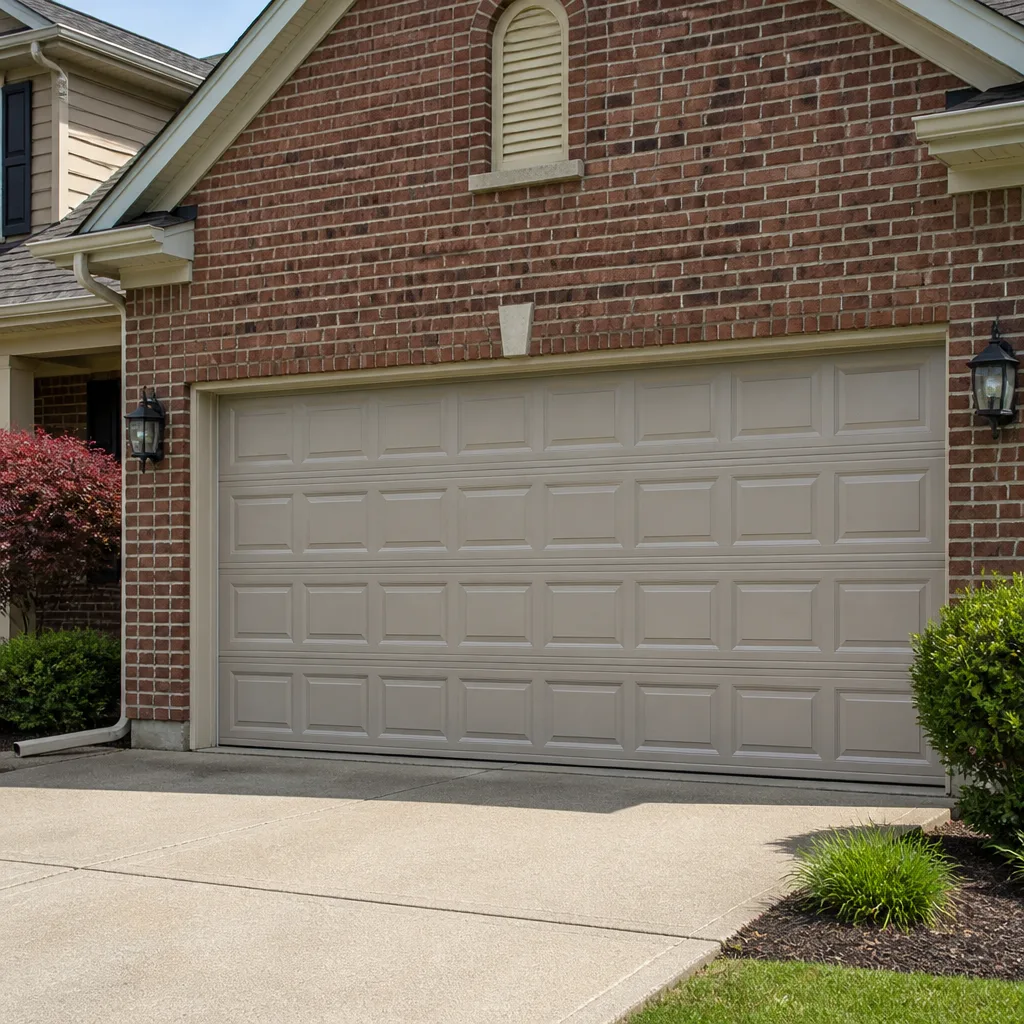 Raised-panel steel
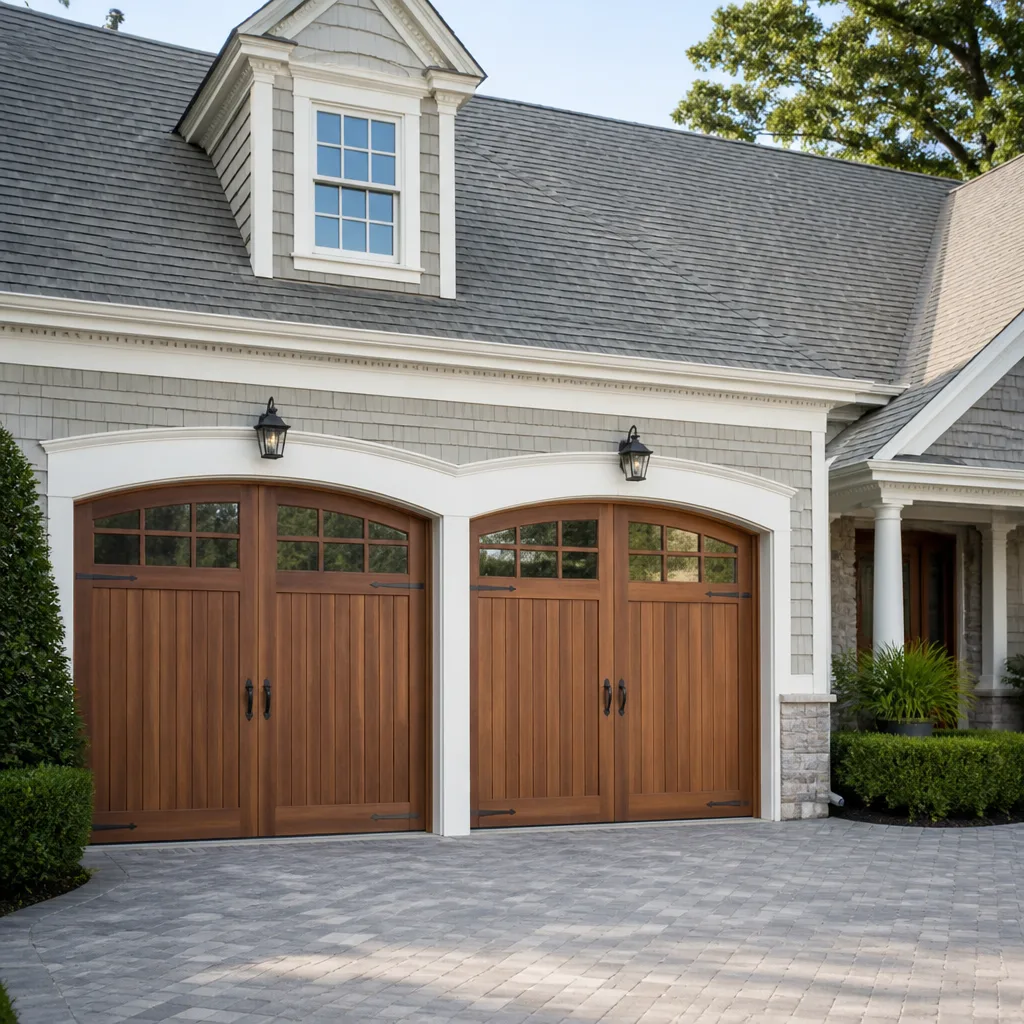 Carriage house
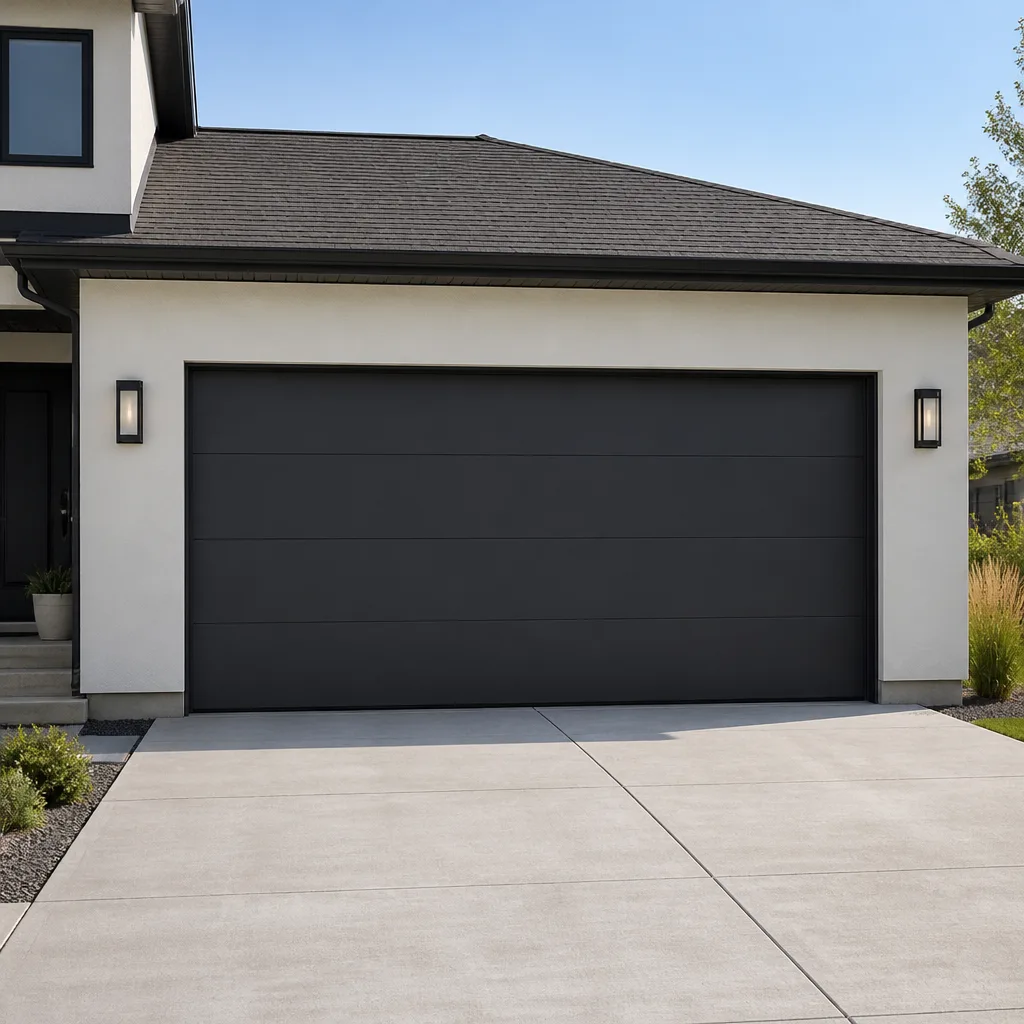 Modern flush
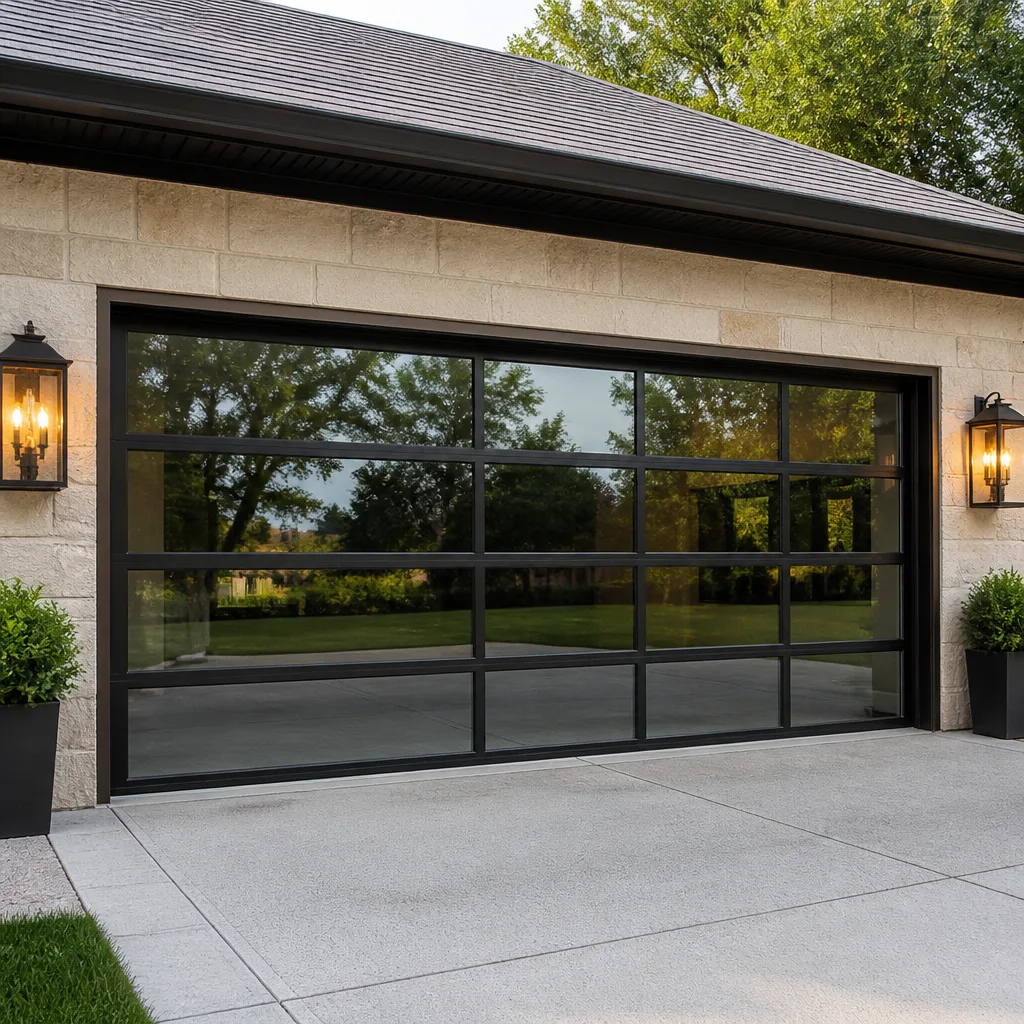 Full-view glass
 LiftMaster openers
 Chamberlain openers
Full 25-point door and opener safety check with every visit - springs, cables, rollers, tracks, and your LiftMaster or Chamberlain opener included
You get a price before we start. It does not change when the pro arrives.
Get your free estimateGarage Door Emergency Preparedness Guide for Mac-Groveland Homes
Here’s the uncomfortable truth about a garage door failure: it almost never happens when you have time to deal with it. If your garage is your main entry into the house and the door jams at 10pm on a Sunday in January, you have about 90 seconds before the cold starts winning and you begin making decisions you’ll regret – prying at the door, yanking the release cord while the door hangs halfway, trying to force the opener. The homeowners who come through a failure without a crisis aren’t luckier. They set up a few things ahead of time: manual release access they understand, a way to secure a door that won’t close, and a technician’s number already saved in their phone. This guide is about building that plan before you need it, written from right here in Mac-Groveland.
Quick Answer
Garage door emergency preparedness for a Mac-Groveland home means three things done in advance: knowing how to safely use the manual release cord (and when not to), having a way to secure a door that won’t close, and knowing what to tell a repair technician when you call so they arrive with the right parts. If a spring has snapped or the door is off its tracks, keep everyone clear and call a professional – don’t force it. You can reach us at (833) 586-4558; we answer 24/7, with fast dispatch from 7am to 7pm, Sunday through Friday.
Styles & brands we work with
- Raised-panel steel
- Carriage house
- Modern flush
- Full-view glass
- LiftMaster openers
- Chamberlain openers
Table of Contents
- Why a Primary-Entry Garage Changes Your Whole Risk Picture
- Using the Manual Release Cord the Right Way
- How to Secure a Garage Door That Won’t Close
- Is the Door Safe to Move by Hand? A Quick Assessment
- What to Tell a Technician When You Call
- The 10-Minute Pre-Emergency Setup
- Mac-Groveland Seasons and Your Door
- When a Repair Turns Into a Replacement
Why a Primary-Entry Garage Changes Your Whole Risk Picture
In a lot of Mac-Groveland homes, the garage isn’t a place to park the car – it’s the front door. You come in through it, haul groceries up the steps through it, let the dog out through it. That arrangement is convenient until the door stops working, and then a mechanical failure becomes a locked-house problem. When the only door you use every day is the one that just quit, everything downstream of it gets harder.
Treat the door the way you’d treat any single point of failure in the house. A furnace has a backup plan of sweaters and space heaters. A garage door, when it’s your main entry, needs its own set of fallbacks:
- A second way in. Know where your house keys are and confirm the front or back door lock actually works, not just theoretically.
- A way to get the car out. If the door is stuck down and the car’s inside, the manual release is your only option – and it has rules.
- A way to keep the house secure if the door won’t close while you’re gone during the day.
- A number to call that answers when something goes wrong, not a general handyman who’ll pencil you in next week.
The thing most Mac-Groveland homeowners don’t think about until it’s an issue is that a garage door is a heavy, spring-loaded system. It isn’t a gate. When something lets go, the safest move is usually to stop touching it and call someone who works on doors every day. That’s the mindset this guide is built around.
Using the Manual Release Cord the Right Way
The manual release cord – the rope with a handle hanging from the opener’s trolley – exists so you can disengage the door from the motor and move it by hand. Used correctly, it gets you out of a jam. Used wrong, it can drop a door hard, bend panels, or send a door crashing down a track. The single most common mistake is pulling the cord while the door is up.
Here’s why that matters. When the door is raised and you pull the release, the door is no longer held by the opener, and it’s now riding only on its springs and tracks. If a spring is weak or broken, gravity takes over and the door can slam down. On a healthy door it may stay up, but there’s no guarantee. For a primary entry in a Mac-Groveland home, that scenario plays out in a hurry – and it’s avoidable.
Correct manual release procedure
- Close the door first when you can. If the door is stuck open and it’s safe to lower it, do that before you touch the release.
- Stand clear of the door’s path. Keep kids and pets away. Never stand under a raised door while you’re releasing it.
- Pull the release cord straight down. A firm downward pull disengages the trolley from the carriage.
- Lift the door slowly by hand. A working door should move with modest effort and stay put when you let go roughly halfway up. If it feels heavy, falls, or won’t hold, stop – something’s wrong with the springs.
- To re-engage, close the door fully first. Then pull the release cord again to reset the carriage, and run the opener once to reconnect. Don’t try to snap the door back onto the opener with the door in the up position.
One more mistake worth flagging: some Mac-Groveland homeowners pull the release every time the opener misbehaves, treating it like a reset button. If your LiftMaster or Chamberlain opener is losing its travel limits repeatedly, the door isn’t the problem – the opener or the sensors are, and that’s a garage door opener repair job, not a release-cord job.
How to Secure a Garage Door That Won’t Close
When the door won’t close, the question isn’t just how to keep it shut – it’s how to keep the house secured until a technician can get there. Some fixes actually hold. Others look closed and aren’t, which is worse because it gives you false confidence.
Methods that genuinely secure the door
- Slide a locking bar or c-clamp through the track just above a roller, on both sides, with the door down as far as it will go. This physically blocks the door from being lifted.
- Padlock the track to the door frame if the door is fully closed but the opener won’t latch it. A hasp and padlock on the inside of each track is a real barrier.
- Brace against the door with a heavy object only as a last resort and only from inside, so it can’t be pushed open from the street.
Methods that look secure but aren’t
- Leaning a broom or board against the inside. It falls at the first nudge. Anyone testing the door knows immediately it isn’t locked.
- Relying on the opener’s closed position when the door has bounced back up. If the opener is reporting “closed” but the door is a few inches off the ground, it’s open to the world.
- Wedging a screwdriver or shim in the track. It can pop loose and damage the roller or the track itself, turning a small repair into a bigger one.
If the door won’t close because something is physically blocking the track – a bent roller, a misaligned panel – the safest short-term move is to secure it as best you can from the inside and get a technician out. This is exactly the situation we built our Garage Door Repair Mac-Groveland service around; a door stuck open is a security problem, not a convenience one.
Is the Door Safe to Move by Hand? A Quick Assessment
Before you try to lift a door by hand, run this check. It takes 30 seconds and tells you whether to keep going or stop and call.
- Look at the springs. Torsion springs live on the shaft above the door – if you see a visible gap in the coil, the spring has broken. Extension springs run alongside the tracks – if one is stretched out, hanging, or has snapped, stop. Do not touch a broken spring or its cables. They’re under extreme tension and can cause serious injury.
- Check the tracks. Look for bent sections, a roller popped out of its channel, or a panel that’s come out of alignment. If the door is off its track, don’t force it – you’ll bend the panel or the track.
- Lift about a foot and let go. A healthy door holds its position partway up. If it falls back down or feels very heavy, the springs aren’t balancing it and you should stop.
- Listen and feel for grinding or binding. A door that shudders or grinds as you lift it has a roller, track, or hinge problem that manual operation will make worse.
If any of these checks fail, the door stays still until a technician can look at it. Your safety matters more than the few hours it takes to get someone out. Spring and cable work is a job for someone trained and equipped for it, plain and simple.
What to Tell a Technician When You Call
A good technician can arrive with the right parts and tools if your call gives them the right information. Here’s what actually helps when you call for garage door emergency service in Mac-Groveland – and what speeds the whole visit up.
- Brand and model of your opener. Tell us whether it’s a LiftMaster, Chamberlain, Genie, or something else, and if you can, the model number off the label on the back or side of the unit. This is where brand-specific knowledge pays off – a LiftMaster or Chamberlain opener has different failure modes than a Genie or a consumer-grade Craftsman, and knowing the brand on the call means the technician arrives ready.
- What the door is doing, in plain language. “Won’t open, opener hums but nothing moves,” “door closes a few inches and reverses,” “one spring is hanging off,” “door is crooked in the track.” Specifics beat “it’s broken.”
- Whether the door is up, down, or stuck partway. This tells the technician how to approach the job safely and whether it needs to be secured before anything else.
- Car trapped inside or outside? If you need the car out for work or an appointment, say so – the technician can prioritize getting you mobile.
- Your address and any access notes. Alley access, a tight driveway, a gate code. In Mac-Groveland’s older blocks, some driveways are narrow, and knowing that ahead of time saves a headache.
One more thing: if you’ve already tried to force the door by hand, mention that. It changes what the technician checks first. No judgment – it just helps.
The 10-Minute Pre-Emergency Setup
This is the part most homeowners skip, and it’s the part that pays off. Ten minutes now means any member of the household can handle a failure without calling you for help.
- Show everyone where the manual release cord is and how to pull it straight down. Walk through it once with each adult in the house.
- Save the garage door repair number in every phone – (833) 586-4558 – and write it on a note taped inside the garage door or by the entry door. If the power’s out, a paper note still works.
- Check the safety sensors are aligned and the small LED lights on them are steady, not blinking. A misaligned sensor is one of the most common reasons a door won’t close, and it’s a two-minute fix most people can do themselves.
- Confirm the front and back door locks work and you know where the keys are, so the house isn’t dependent on the garage door alone.
- Keep a flashlight in the garage and a set of backup keys somewhere other than the car.
- Note your opener brand and jot the model number on that same note.
That’s it. Ten minutes and a note. The goal is that if the door fails while you’re out of town, the person at home knows exactly what to do and who to call – and it’s not the phone-tree scramble that turns a bad night into a bad memory.
Mac-Groveland Seasons and Your Door
Minnesota weather is hard on garage doors, and Mac-Groveland’s older housing stock adds its own quirks. A few things specific to the neighborhood:
- Cold snaps stress springs and openers. Metal contracts, lubricants thicken, and an opener that’s been marginal all fall can start failing when the temperature drops. If your door has been sluggish or noisy, it’s worth getting ahead of before the deep freeze.
- Freeze-thaw moves the ground. Older driveways and garage slabs can shift with the frost, which sometimes throws a door slightly out of level or knocks a sensor out of alignment. If the door suddenly reverses or won’t close, check the sensors first.
- Snow and ice buildup at the threshold can prevent a door from closing fully and trigger the safety reverse. Clear the threshold before you blame the opener.
- The older homes here often have original or older aftermarket openers – a lot of Craftsman and Genie units, and plenty of LiftMaster and Chamberlain replacements. We service all of them, plus Clopay and Amarr doors, Wayne Dalton and Raynor systems, and more.
None of this is a reason to panic. It’s a reason to treat the door as seasonal equipment worth a quick look before winter and again in spring, the same way you check the furnace filter.
When a Repair Turns Into a Replacement
Sometimes the emergency visit ends with a repair, and sometimes it ends with a conversation about a new door. It’s worth knowing the signs ahead of time so the decision isn’t made in a rush.
A repair is usually the right call when the problem is mechanical and contained: a broken spring, a failed opener, a bent track, a single damaged panel, a roller or hinge that’s worn out. Most of these can be fixed on a single visit, and if it’s the opener, brand-specific repair matters – a LiftMaster or Chamberlain unit has different components than a Genie.
A replacement starts to make more sense when the door itself is failing structurally: multiple bent or rusted panels, a door that’s out of square and won’t stay aligned no matter how many times it’s adjusted, or a door that’s simply reached the end of its life alongside an opener that’s failed too. If the repair cost starts approaching the price of a new door, that’s the point to talk about options.
Because we handle both, you don’t need to call a second company when a repair turns into a replacement. We diagnosis it, quote it, and can move straight to garage door installation if that’s the right answer. The written estimate sets the final price, and we quote before any work starts – no surprises on the invoice.
Common Mistakes to Avoid
- Pulling the manual release while the door is up. It can drop hard, especially if a spring is weak or broken. Lower the door first when you safely can.
- Forcing a door that’s off its track. Pushing or prying a misaligned door bends panels and tracks and turns a small repair into a full one. Stop and call.
- Touching a broken spring or a loose cable. These are under extreme tension and can cause serious injury. Keep everyone back and wait for a trained technician.
- Treating a door stuck open at night as “we’ll deal with it tomorrow.” That leaves the house open to the alley. Secure the door from the inside or call for emergency service – a stuck-open door is the case we specifically built our emergency service around.
- Assuming the opener is the problem when it’s the sensors. A blinking sensor light means the door won’t close, no matter how many times you press the remote. Check the sensors first.
- Ignoring a slow, noisy, or reversing door. These are warning signs of a failing spring, a worn roller, or a misaligned track. Getting ahead of a small issue in Mac-Groveland beats dealing with it during a cold snap.
- Waiting to save the repair number until you need it. The worst time to look up a phone number is when the door’s stuck and the house is cold. Put (833) 586-4558 in your phone now.
See the difference
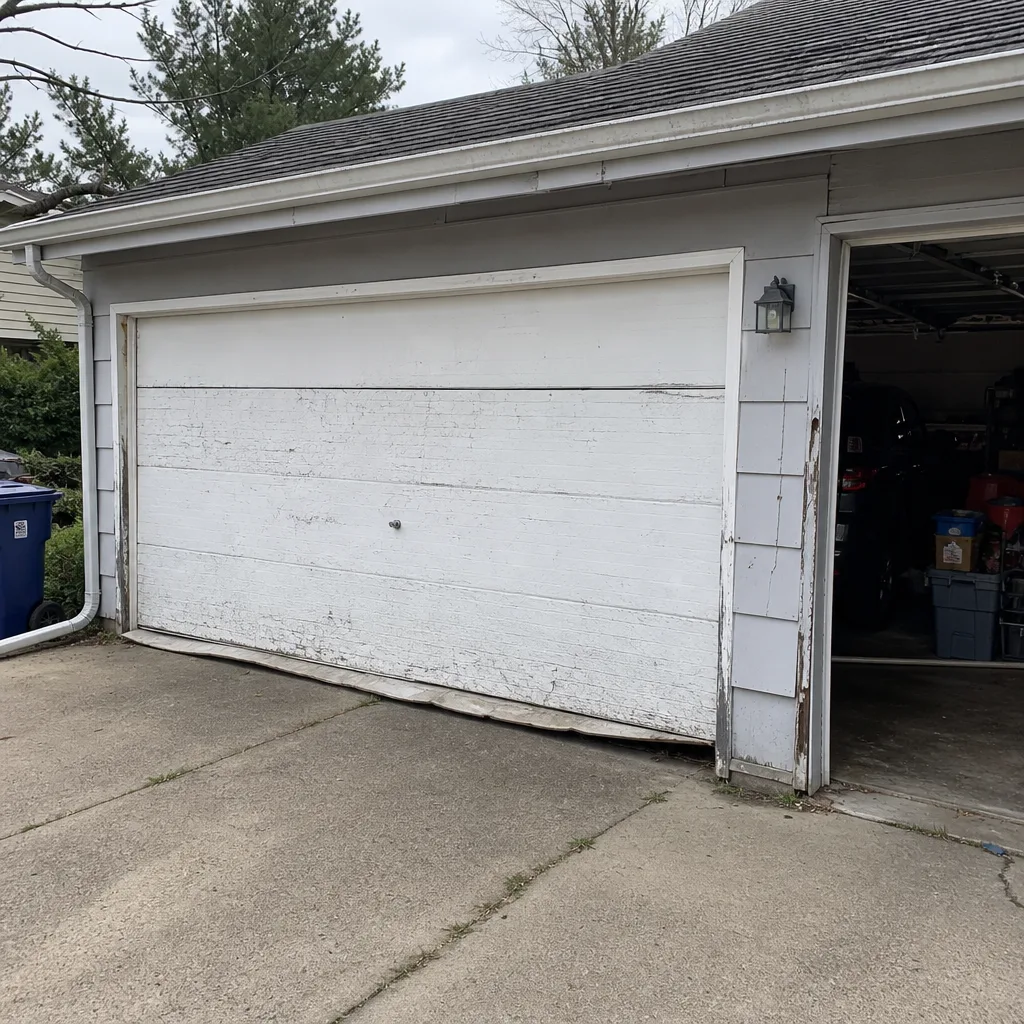 Before
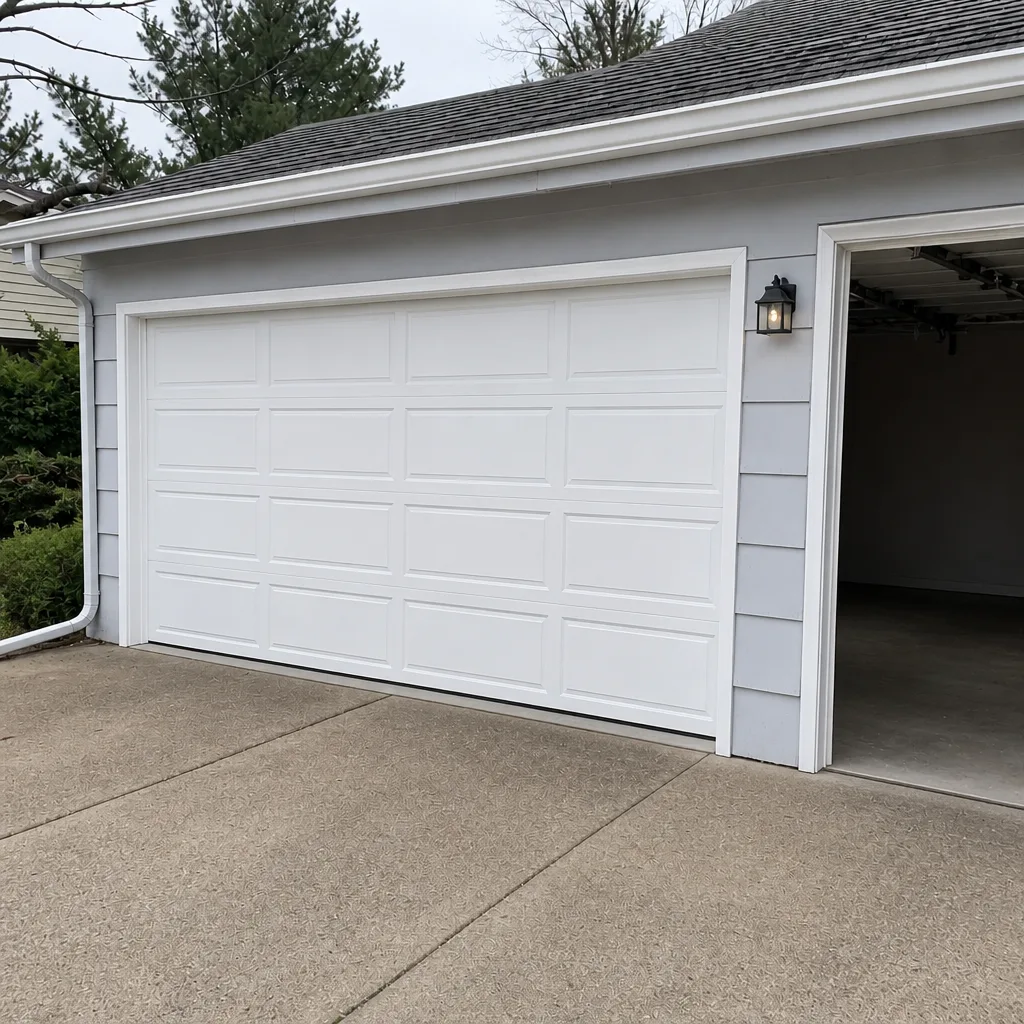 After
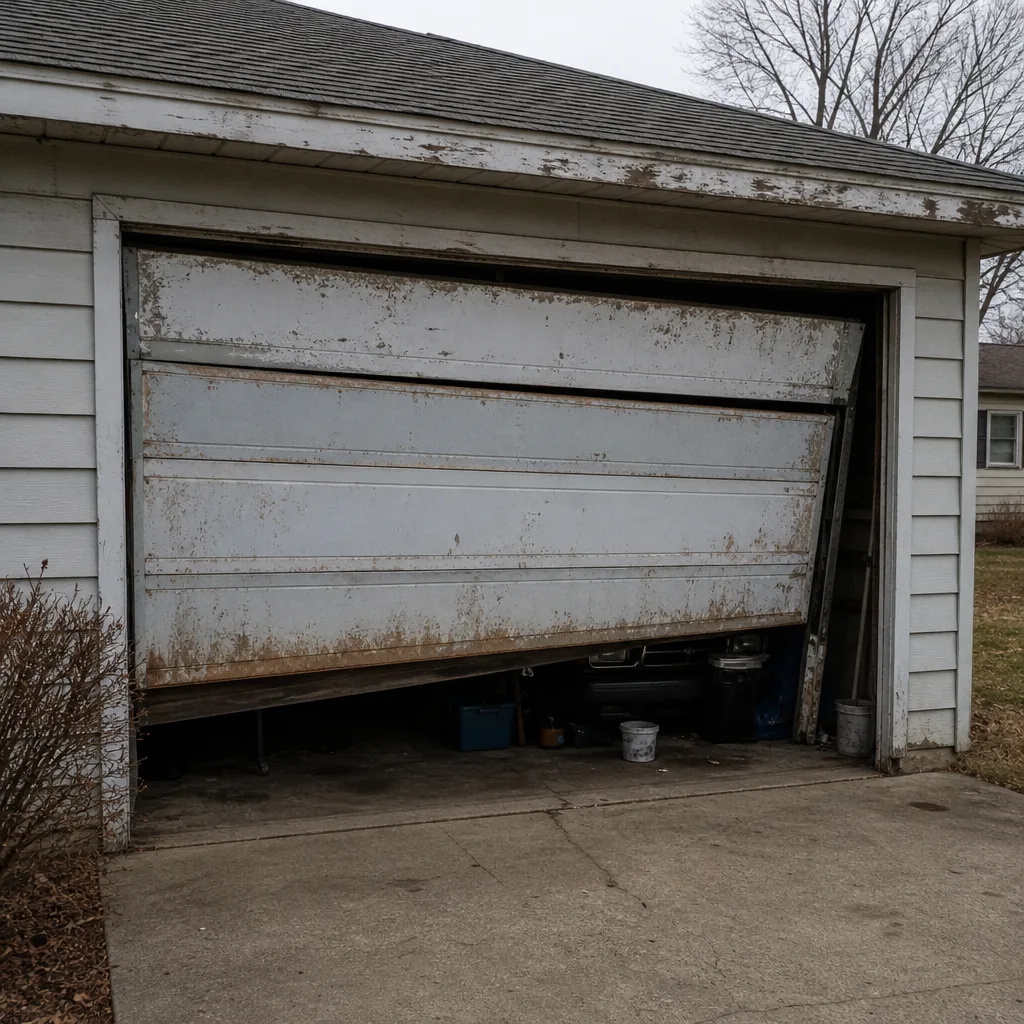 Before
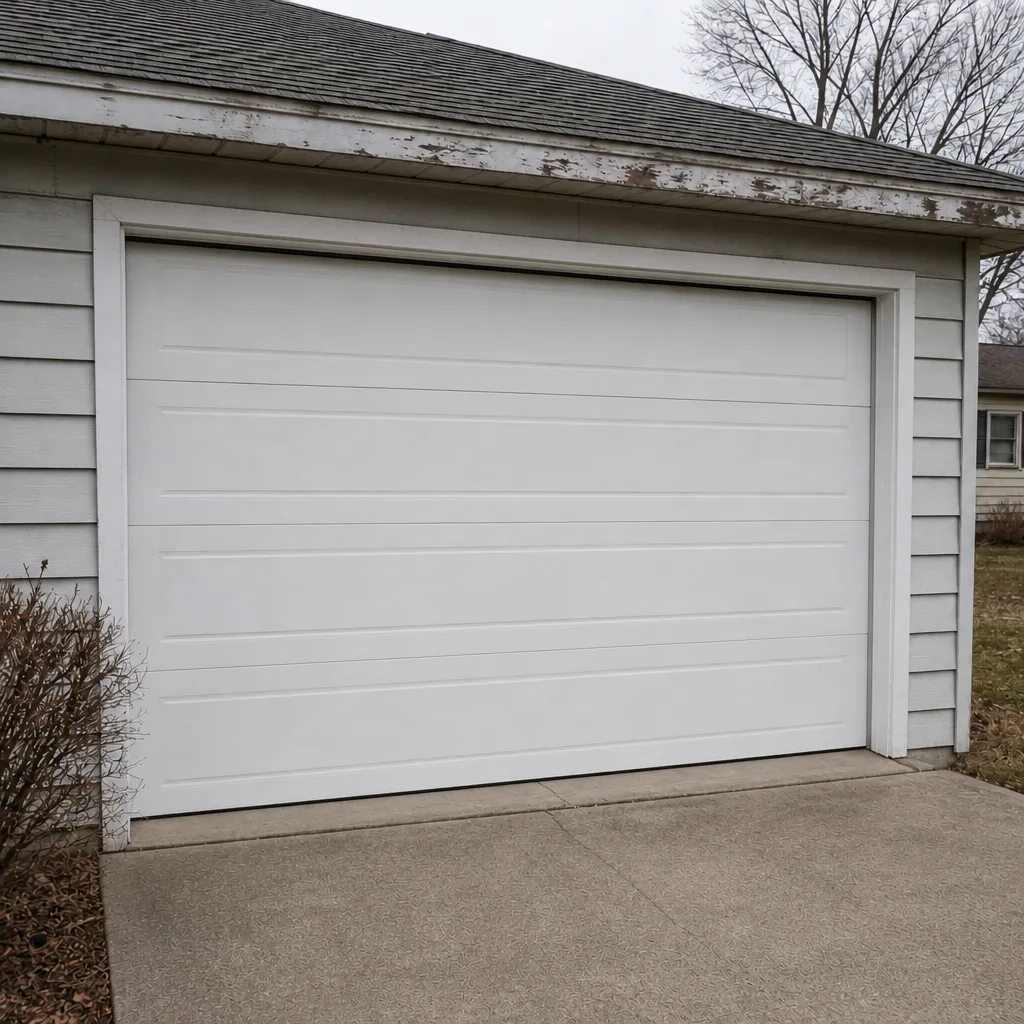 After
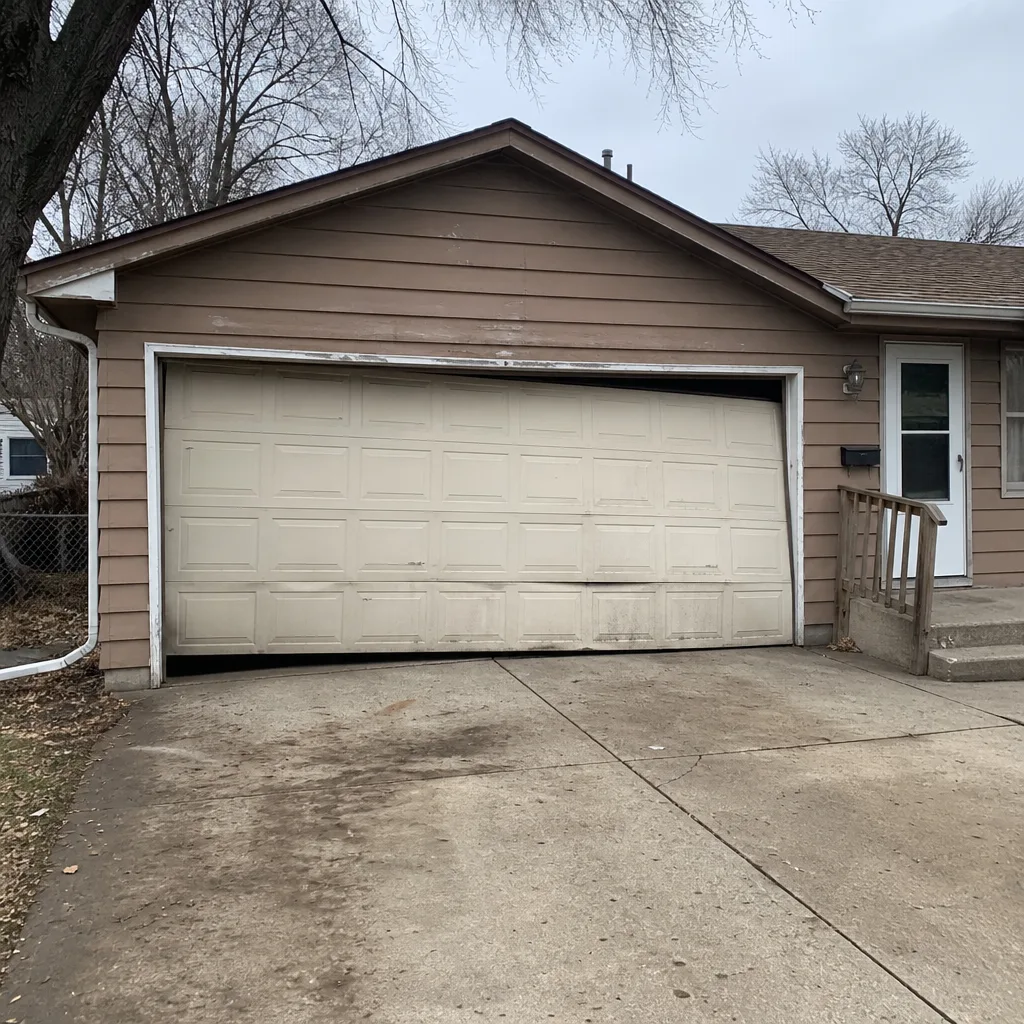 Before
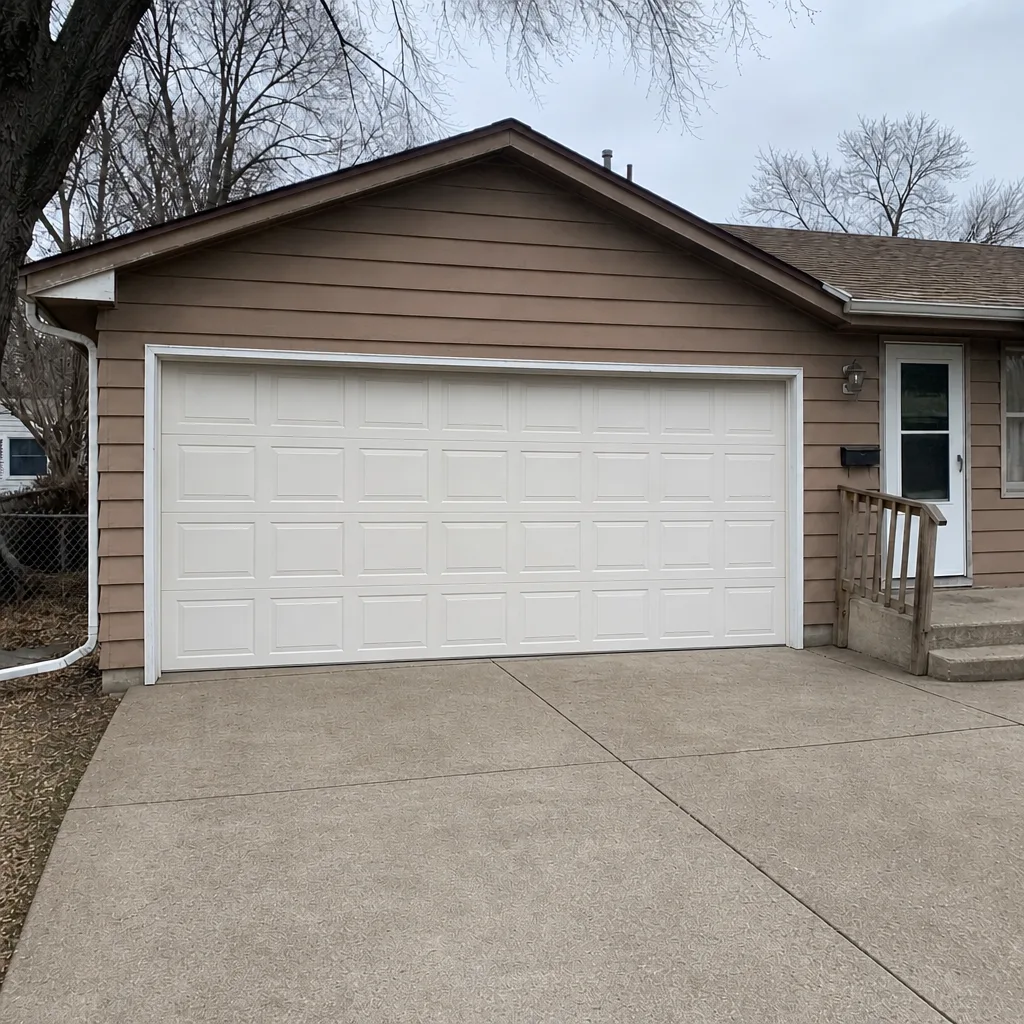 After
When to Call a Professional
Call a professional when a spring is broken, a cable is loose, the door is off its track, the door won’t hold position when lifted partway, or the opener hums but the door doesn’t move. Those are all signs of a mechanical failure that no amount of button-pressing will fix, and some of them carry real injury risk if you try to handle them yourself. Call us when the door won’t close and the house needs securing, when the car is trapped and you can’t wait for a scheduled appointment, or when the door has failed openly and you need it addressed quickly.
Garage Door Repair Mac-Groveland offers free estimates in Mac-Groveland – call (833) 586-4558. Our technicians have up to 11 years of experience working on LiftMaster, Chamberlain, Genie, Clopay, Amarr, Wayne Dalton, Craftsman, and Raynor systems, from a stuck spring to a full new door. Same visit, same technician, diagnosis through repair under one call.
Frequently Asked Questions
The price depends on the problem – a spring repair is a different job from a bent track or a failed opener – so the fairest answer is that you get a written estimate before any work starts, and that estimate sets the final price. Call (833) 586-4558 for an exact quote; estimates are free, and we answer 24/7 with fast dispatch from 7am to 7pm, Sunday through Friday.
Same-day service is available for urgent repairs like a door stuck open, a broken spring trapping the car, or a door that won’t close. Call (833) 586-4558 and we’ll get a technician out as fast as we can – we answer 24/7. A call outside dispatch hours is booked into the next opening, Sunday through Friday, 7am to 7pm.
No. We quote the job and agree on the price before any work starts, and the written estimate is the price. If we find something different once we’re looking at the door, we tell you before we do the work so you can decide.
The local professional who comes to your door is licensed and insured as the state requires. Our technicians have up to 11 years of experience working on all major door and opener brands, including LiftMaster, Chamberlain, Genie, Clopay, Amarr, Wayne Dalton, Craftsman, and Raynor.
Secure the door from the inside as best you can – a locking bar or c-clamp through the track, or a padlock, is far better than leaning something against it – then call for emergency service. A stuck-open door isn’t just an inconvenience in Mac-Groveland; it’s an open door to the house. Call (833) 586-4558.
Only if the door isn’t the problem. If the opener has failed but the springs are fine, the release cord can get you out – lower the door first, pull the cord straight down, and lift the door by hand. If a spring is broken or the door is off its track, the door may drop or bind, and you should keep it still and call a technician.
The Bottom Line
Emergency preparedness for a Mac-Groveland garage door comes down to three habits: understand the manual release and never pull it while the door is up on a suspect spring, know how to secure a door that won’t close with something that actually holds, and have the repair number saved before you need it. Add the ten-minute household setup, and a failure stops being a crisis and becomes a phone call. If the door is stuck, broken, or unsafe to move, don’t force it – call us. Garage door repair, spring work, opener repair, and full installation across every major brand, with a free estimate and a written price before any work begins.
Call (833) 586-4558 for a free estimate. We answer 24/7, with fast dispatch from 7am to 7pm, Sunday through Friday. You can also start with our garage door repair service if the door has already failed and you need help today.
Written by the team at Garage Door Repair Mac-Groveland.